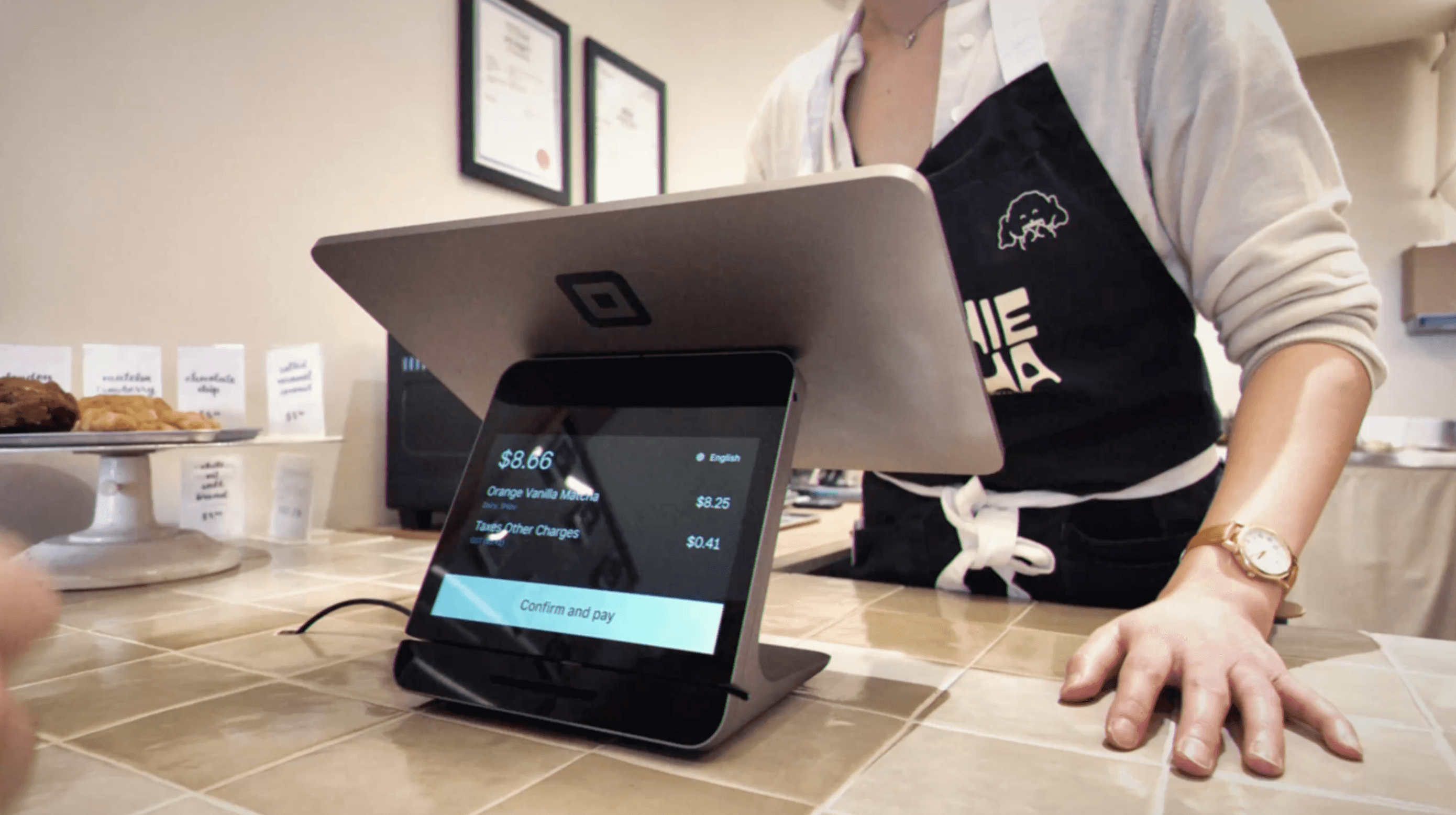
Problem
Square services a few verticals. Among them are retail, food and beverage, appointments and services, e-commerce, and invoices. Each had its own app, its own relationship to orders, and its own patchwork of post-order tools. The existing order and fulfillment management system could no longer support the evolving and nuanced needs of businesses today. Square needed a system that was able to support any order type, placed from any sales channel.
My role
Product design lead on the platform fulfillment team consisting of two engineering squads, a shared PM, and me as the sole designer. I designed and led the migration and new experience for a fulfillment platform any vertical could plug into.
Three decisions that shaped the work
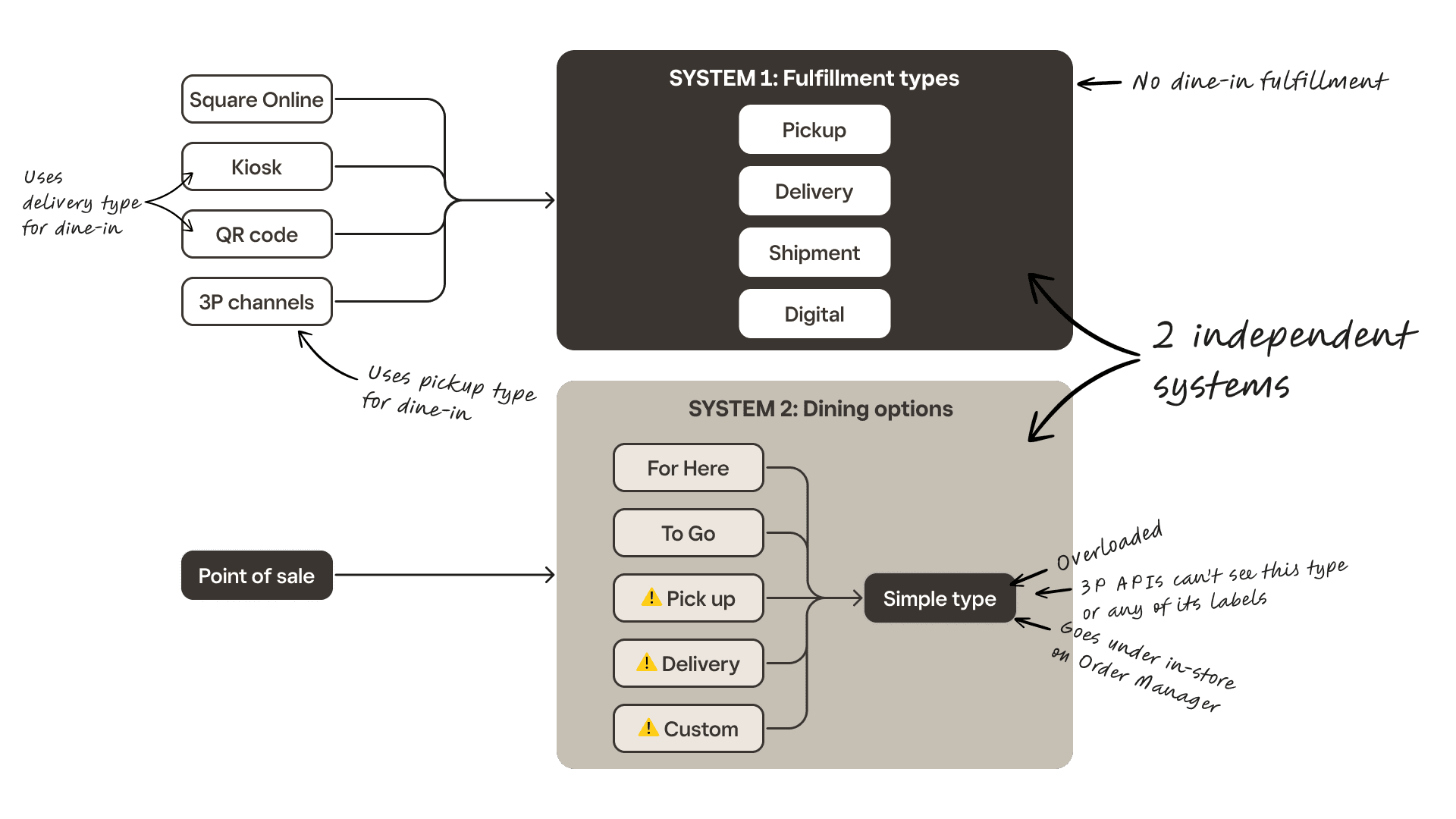
Unify fulfillment under orders, not per vertical
The original approach was multiple parallel tracks. I pushed for one shared foundation — same workflow shape, one seller experience, one codepath. I grounded it in one major pain-point: post-it notes stuck to terminals to fake pickup orders the system couldn't handle.
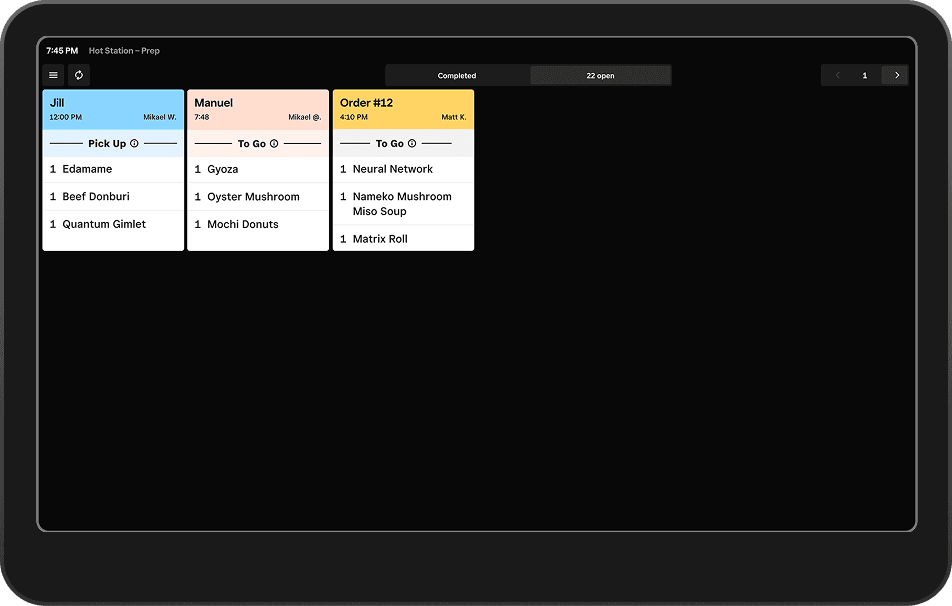
Composable templates and modular components
Working closely with engineering, we built a settings architecture where fulfillment methods are composed from configurable elements. Simple sellers get a preset while complex sellers extend it. New fulfillment workflows don't require new primitives anymore.
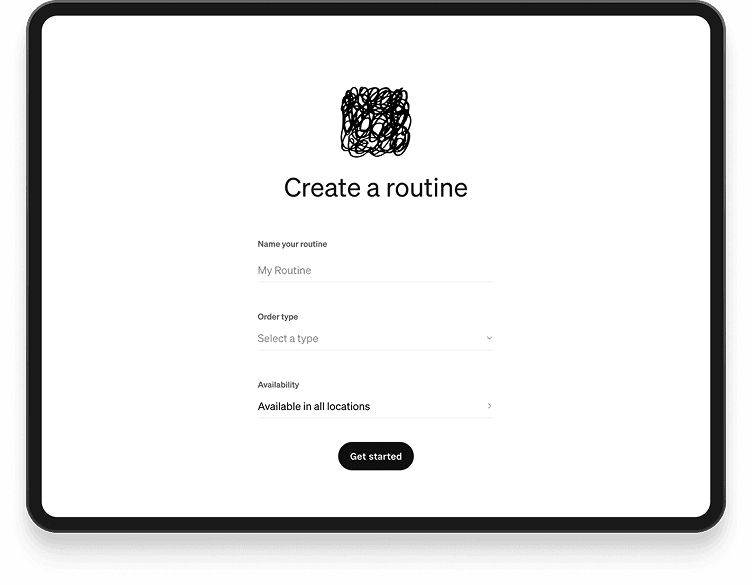
Opt-in migration from Dining Options
Forcing the switch would have broken real workflows — kitchen shorthand, section names, invisible conventions sellers relied on. I designed an auto-mapping experience where sellers confirmed rather than reconfigured their settings.
Map your custom dining options
Please confirm that your custom dining options are mapped correctly.
Outcome
The Fulfillment Platform is the first unified fulfillment system across Square's verticals, impacting an estimated 35-48% of all active Food & Beverage sellers. It unlocked end-to-end order tracking, cashier prompting, unified reporting, and support for phone orders from POS — workflows previously managed on sticky notes.
F&B seller impact
35-48%
of all active Food & Beverage sellers on Square